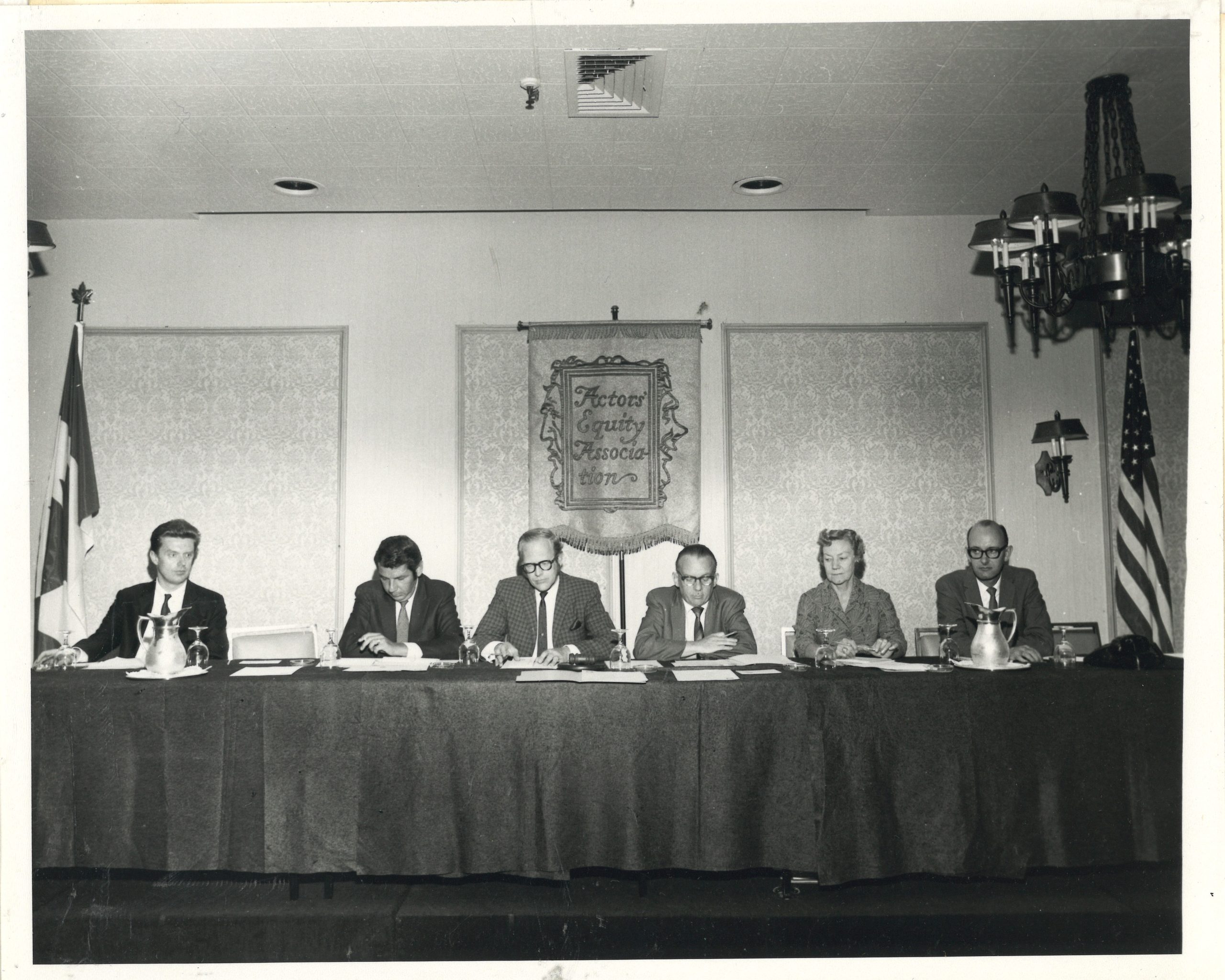
Anyone familiar with the history of North American theatre in the 19th and early 20th centuries knows the horror stories — the exploitation of artists by unscrupulous managers and producers. Wages and working conditions were set unilaterally by producers, and a performer could easily find themselves stranded without pay in a one-horse town in the Midwest when either the producer went bankrupt or the manager vanished with the funds.
While the rise of trade unions in the United States helped establish some basic rights for artists, the same protections didn’t yet exist in Canada. It wasn’t until after World War II — spurred by the sudden proliferation of summer stock theatres, the launch of the Stratford Festival in 1953, and the founding of regional theatres — that Canadian stage performers began to feel a pressing need for stronger representation and protections.